
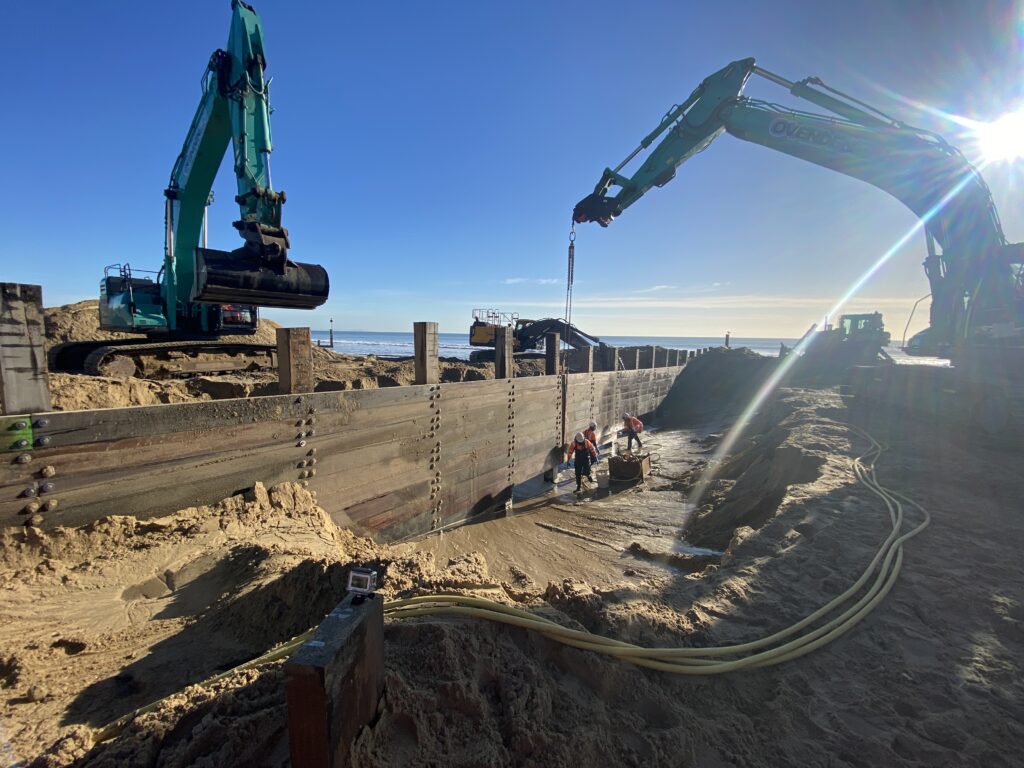
The rise and fall of tides may be predictable, but the same doesn’t always apply to conditions and complications tides create for coastal engineering projects. There are many unique technical challenges that call for specialist solutions.
Coastal environments are dynamic systems. They are subject to erosion and shifting sands owing to the effects of tides and currents. Design considerations aren’t just about the practicalities of creating a new or replacement structure in a specific location, but how conditions are likely to change over many years.
Fit For The Future
This is exacerbated by the probability of rising sea levels and more extreme weather events in the future. These factors will affect the degree of coastal erosion. Many of our previous projects have involved rectifying the effects of coastal erosion – understanding how this is likely to change is a vital design consideration to ensure new structures are not progressively undermined.
Project execution needs just as careful consideration. Sand tends to become unstable during excavation – so plant movements and access for the general public need to be controlled to ensure everyone is kept safe.
The choice of equipment such as excavators and piling rigs can become critical as ground conditions may be unsuitable for large axle weights. Self delivery using our own plant ensures there are no compromises needed.
When we work in tidal zones we keep a keen eye on weather forecasts, adjusting the delivery plan to stay on track even when high winds or rough seas would make working more difficult or unsafe.
Sensitive Environments
Tidal zones are particularly environmentally sensitive. As well as using biodegradable oil in all vehicles, it’s necessary to deploy clean working methods and use local materials wherever possible to blend with the local environment.
Project plans are uniquely tuned to tidal conditions. For example, when rebuilding the Hamworthy Seawall, concrete pours were timed to coincide with the receding tide. This maximised curing before the new concrete was immersed by the next high tide. Foam lining on the shutters prevented any washout of uncured concrete.
Similarly, when installing new timber groynes as part of the Poole Bay sea defence scheme, multiple groynes were installed simultaneously to make maximum use of the low tide periods and reduce the overall project schedule.
To find out more about our projects: simplified approach to delivering project certainty, sign-up to our information and insights section below.
