
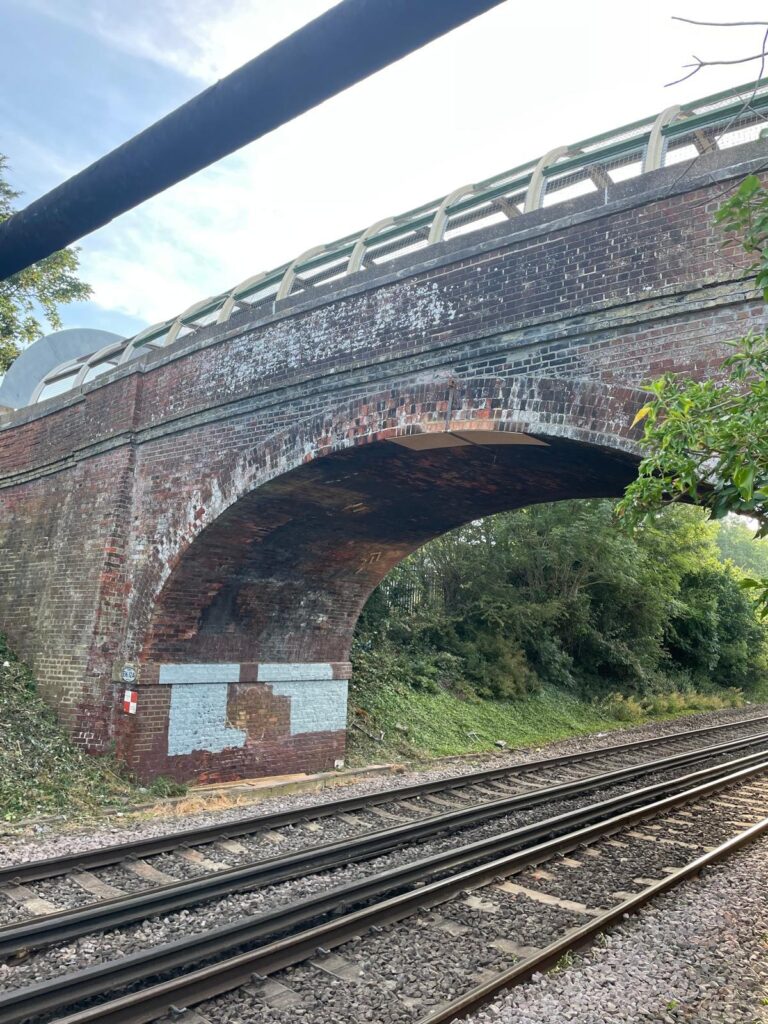
Maintaining historic infrastructure requires the right balance of careful planning, technical expertise and safe delivery.
Recently, our team carried out essential maintenance during a planned railway possession at the Racecourse Lane Footbridge, a brick masonry arch structure dating back to circa 1850, used as both a pedestrian & rail footbridge. While modest in scale, projects like this play a vital role in preserving historic railway assets and ensuring they remain safe and serviceable for future generations.
The Challenge
As with many ageing masonry structures, the footbridge had developed several defects that required attention to prevent further deterioration.
Areas of brickwork had begun to degrade, mortar joints had weathered over time, vegetation was establishing itself within the masonry, and graffiti was affecting the overall appearance of the structure. Left untreated, these issues can accelerate deterioration, allowing moisture ingress and increasing the likelihood of more extensive repairs in the future.
Delivering the works also presented logistical challenges. The maintenance had to be undertaken during a planned rail possession, where access to the railway is tightly controlled. In addition, the bridge’s configuration required careful planning to ensure all work could be carried out safely and efficiently.
Delivering the Solution
Detailed planning was fundamental to the successful delivery of the project.
Working within the possession, our team coordinated the mobilisation of scaffold towers to provide safe access to all areas requiring maintenance. This enabled the works to be completed efficiently while maintaining the highest standards of safety.
The scope of works included:
- Localised repairs to damaged arch brickwork
- Repointing deteriorated mortar joints
- Renewal of mastic joints to improve weather resistance
- Removal of vegetation to prevent further structural deterioration
- Graffiti removal to improve the bridge’s overall appearance
Although each task may appear relatively straightforward in isolation, together they contribute significantly to the long-term performance and resilience of the structure.
Why Preventative Maintenance Matters
Historic masonry bridges continue to form an important part of the UK’s railway infrastructure. Many have been in service for well over a century and, with the right maintenance strategy, can continue to perform effectively for decades to come.
Preventative maintenance is about addressing defects at the earliest opportunity. Small areas of deteriorating mortar, isolated brickwork damage or vegetation growth can quickly develop into more significant structural issues if left unattended. By intervening early, we can reduce long-term maintenance costs, minimise disruption and help preserve the historic character of these structures.
Projects like this demonstrate the value of planned maintenance in extending asset life while maintaining safe and reliable infrastructure.
The Outcome
The completed works have helped preserve the structural integrity of the Racecourse Lane Footbridge while improving its condition, resilience and usability for the pedestrians who rely on it.
Delivered safely within a planned rail possession, the project is another example of how careful planning, skilled workmanship and collaborative delivery can protect historic railway infrastructure for years to come.
At Suttle Projects, we’re committed to delivering high-quality infrastructure maintenance that protects historic assets, extends their operational life and keeps the railway running safely and reliably.