
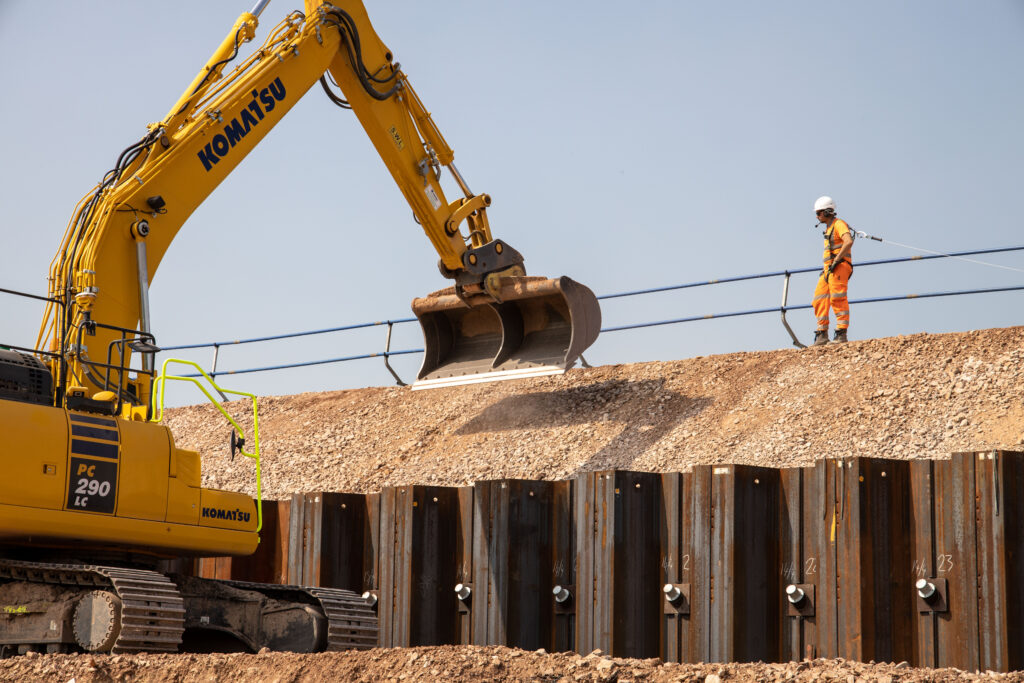
Designing elegant and robust technical solutions for rail infrastructure projects is one thing. But what does it take to achieve this under extreme time and operational pressure – usually because an embankment or other asset has failed?
The answer doesn’t lie in designing a new process. It’s more a case of delivering an existing robust process – with all the essential rigour, QA and safeguards – within a truncated timescale. Days, or even hours, instead of weeks or months.
Process efficiency is easier to achieve when you’ve configured your entire business model around simplifying project delivery: eliminating surprises, streamlining communication, rapid decision making, and ensuring rapid deployment of expertise and equipment.
If there’s a difference between designing planned and emergency maintenance works, it’s that the emergency process needs to be highly iterative. You may not have all the critical site information when you start planning and you need to adapt rapidly as new details are identified.
Theory Into Practice
Simplified delivery is an easy enough concept. The practicalities can be more challenging when there are a host of potential technical and logistical issues that are hard to predict. It’s harder still when the design and delivery network involves multiple partners.
With emergencies, the basic project delivery framework remains but with acute added urgency. Where needed, detailed geological surveys and ground investigations ensure there are no surprise factors to interrupt the flow of project delivery and cause delays.
Our in-house team specialises in creating highly buildable designs that can be executed securely under time pressure. Extensive self-delivery capabilities including piling, plant, quarry materials and specialist equipment ensure that the project team retains full control over how resources are deployed.
Some Examples
The emergency response to a major embankment slip between Eastleigh and Fareham involved a four-week intense stabilisation phase followed by a five-month enhancement programme.
The full project involved:
- Installing a mile-long access road.
- Removing 35,000 tonnes of saturated material.
- Over 1800 Larssen sheet piles in various lengths.
- A support system of heavy Macalloy tie rods and walings between sheet pile walls over the critical failure section.
- Backfilling with 40,000t of crushed aggregate.
- Over 1 km of drainage to enhance the stability.
The efficient design and delivery process ensured the railway was opened a week earlier than originally anticipated. The ever-changing work scope required a strong interface between designer, main contractor and Suttle Projects.
To find out more about how we simplify delivery of emergency and planned rail maintenance head over to our information and insights section below.
