
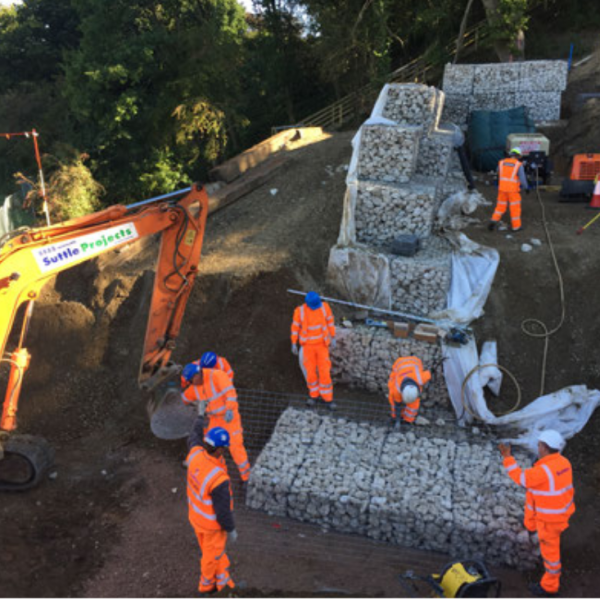
It’s 11.00 pm on a Saturday night. It’s cold. The wind and torrential rain are lashing at the windows. Any sane person would be out socialising or tucked up indoors, cocooned and sheltered from the cruel elements.
And then the call comes in. The harsh weather has taken its toll on a rail embankment. The bank has slipped away leaving a section of track undermined and unsafe.
Who will you call in that moment? Who would be ready to swing into action to assess the failure and start the process of making it safe?
Decisions taken in the immediate aftermath of the failure can have far-reaching consequences for the process of restoring the line to full and safe operation. This matters because, although the sector is getting better at using technology to identify at-risk locations and take proactive ground stabilisation measures, more frequent extreme weather is placing more assets at risk.
Expertise On Call
Getting the right expertise to the site as quickly as possible is critical. The sooner they can start making a detailed assessment of the failure and any constraints that would affect the solution design and implementation, the better. Work can then start marshalling the equipment, materials and expertise that are likely to be needed.
Rapid mobilisation has to run like clockwork. It’s not a time for deciding what needs to happen, it’s a time for doing – following a familiar script where everyone knows their lines perfectly.
As part of our established rapid mobilisation process, Suttle Projects has teams working nationwide and across the Southern region. We always have a manager or supervisor less than two hours away from any site.
And because bad weather, landslips and failures don’t keep office hours, we have a weekend and out-of-hours call-out service that is always ready to respond.
Beyond that, our projects: simplified approach and self-delivery capabilities ensure that remedial works go from design to handover in the shortest time possible.
Head over to our information and insights section below to find out more.